
Markets We Serve
Specialty Foundation Work for Infrastructure, Buildings, and Active Sites
Pacific Foundation supports owners, contractors, and design teams on deep foundation, ground improvement, and earth retention work. Pacific begins with the ground conditions, access, and structural demands that control construction.
Infrastructure
Water, transportation, utility, marine, and civil projects often place foundation work inside tight sequencing and public-interface constraints.
Buildings
Commercial, civic, institutional, and mixed-use work can require support around adjacent structures, settlement limits, and urban access.
Active Sites
Industrial, energy, and operating facilities need field plans that respect access, shutdowns, utilities, and ongoing operations.
Market Fit
The market matters because site constraints change the work
The same foundation method can behave very differently on a bridge, treatment plant, waterfront site, retrofit, or downtown excavation. Pacific reviews the work around how the market changes access, sequencing, utilities, water, verification, and coordination.
Bridges & Transportation
Bridge, roadway, rail, and transportation scopes often combine drilled foundations, micropiles, driven piles, shoring, and staged access around traffic or water.
Water & Wastewater
Treatment plants, pump stations, conveyance work, and water infrastructure can bring groundwater, excavation support, deep foundations, and ground improvement into the same plan.
General Civil
Civil infrastructure work often turns on constructability: ground conditions, utilities, temporary works, access, material handling, and coordination with follow-on trades.
Marine & Port
Harbor, wharf, and waterfront scopes require method planning around water, working platforms, tide or access limits, marine infrastructure, and ground improvement needs.
Commercial & Mixed-Use
Building projects may need foundation and shoring support where property lines, adjacent structures, excavation depth, and schedule shape the method.
Civic & Institutional
Public and institutional work can involve seismic retrofit, constrained access, active facilities, and documentation requirements that need early field planning.
Utilities & Energy
Utility and energy scopes often require drilled support, retention, ground treatment, and careful coordination around existing services and operating infrastructure.
Advanced Facilities
Data center and advanced facility work should be scoped around access, production sequence, utility coordination, confidentiality needs, and tolerance-sensitive construction.
Field Conditions
Specialty foundations are selected around constraints, not labels
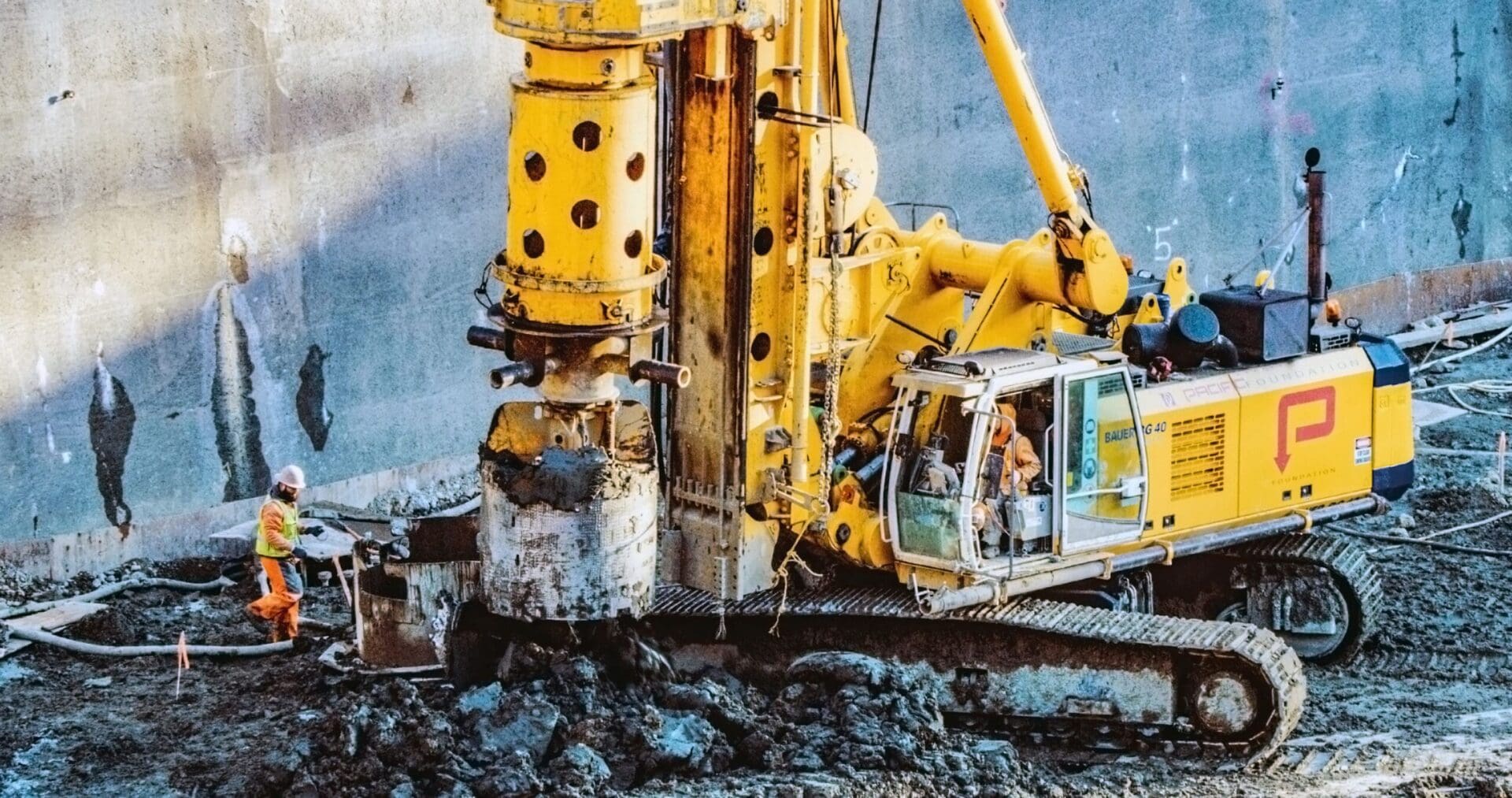
Market labels organize the work, but field conditions determine what can be built. Pacific reviews the ground profile, groundwater, access, and structural demands before the foundation approach is finalized.
That early review narrows the foundation, retention, or ground-improvement systems that can work on the site.
Services
Connect the market need to the right specialty method
Early scope review is most useful when the team can compare foundation, shoring, and ground improvement options before the work is locked into a single method.
Deep Foundations
Drilled shafts, CFA piles, driven piles, displacement piles, and micropiles for load transfer, restricted access, retrofit, bridge, building, and infrastructure work.
Ground Improvement
Jet grouting, deep cement mixing, rigid inclusions, and related methods where soil treatment, settlement control, water control, or seismic response shape the design.
Earth Retention
Soldier pile walls, ground anchors, secant and tangent piles, sheet pile, soil nails, and underpinning for excavation support and adjacent-site constraints.
Scope Review
Bring Pacific in before the market constraints become field conflicts
Send drawings, the geotechnical report, access limits, utility information, phasing, adjacent-structure concerns, testing requirements, and the schedule. Pacific can review the specialty foundation scope around how the site will actually be built.