

Ground Anchors
Ground anchors provide tested, tensioned restraint for shoring walls, slopes, and existing structures where lateral loads require support beyond the wall face.
Pacific Foundation installs tiebacks together with the walls they support, coordinating wall and anchor construction for constrained excavations.
How Ground Anchors Work
A ground anchor is drilled and grouted into a stable bond zone behind the retained face, then tensioned, tested, and locked off to support the wall or slope. In shoring work, ground anchors are often called tiebacks.
Unlike passive soil nails, anchors apply active restraint. Design loads, easements, utilities, drilling access, corrosion protection, testing, and excavation timing therefore have to be resolved with the wall system.
When to Use Ground Anchors
Ground anchors fit when a shoring or retaining system needs support beyond the face of the wall. The method becomes more complicated when anchors extend beyond the property line, cross utility zones, encounter weak bond conditions, or require permanent corrosion protection.
Soldier Pile Walls With Tiebacks
Anchors can support soldier pile and lagging walls where retained height, surcharge, or movement tolerance requires active restraint.
Secant Or Tangent Wall Support
Anchors may reinforce drilled pile walls where wall continuity, excavation depth, or groundwater conditions shape the shoring plan.
Underpinning And Existing Wall Support
Anchors can help restrain existing walls or underpinning systems when adjacent structures or staged excavation drive the work.
Slope And Cut Stabilization
Anchored systems may be considered where slopes, cuts, or retained earth require controlled resistance into a competent bond zone.
Temporary Or Permanent Conditions
Temporary anchors and permanent anchors require different assumptions for corrosion protection, testing, documentation, and long-term performance.
Equipment and Tooling
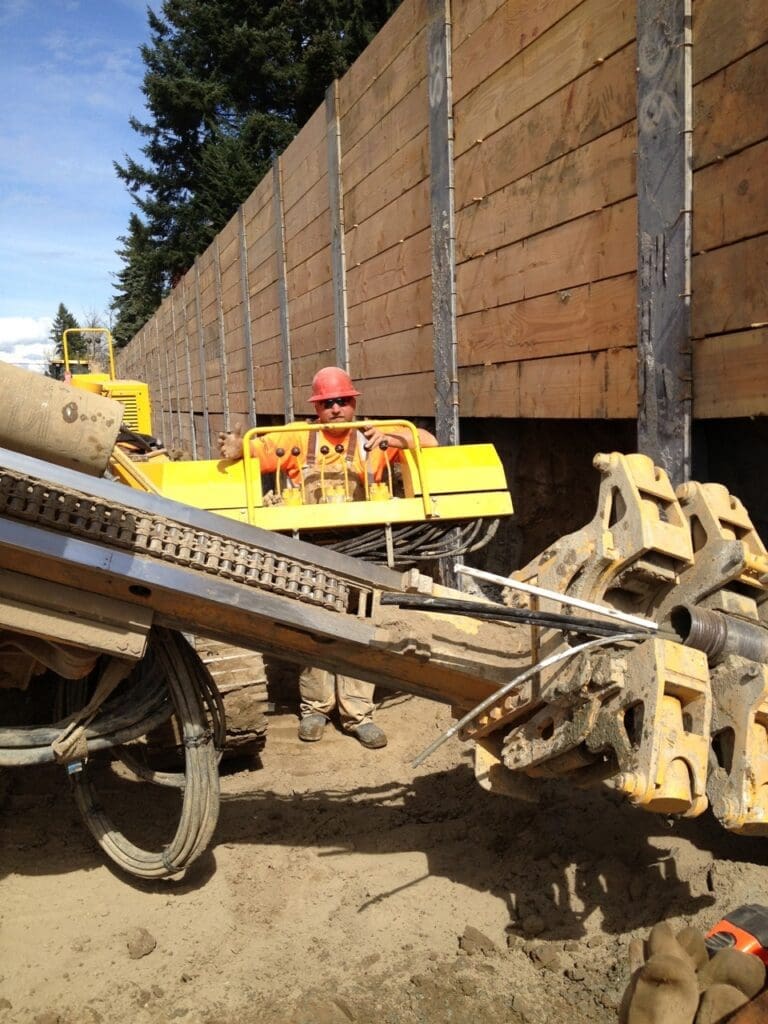
Ground anchor work typically relies on small-diameter drilling equipment, grout support, tendon or bar handling, and testing equipment. Rig selection depends on access, bench width, anchor angle, drilling length, ground conditions, casing needs, overhead clearance, wall geometry, and the excavation sequence.
Used where anchor alignment, wall access, bench width, and drilled-hole conditions control the setup.
Review EquipmentAnchor performance depends on controlled grout placement, bond zone conditions, and documentation.
Discuss ScopeProof testing, performance testing, and lock-off requirements must be planned before production anchors begin.
Send Us Your PlansFinal equipment selection depends on anchor geometry, access, ground conditions, casing, grout support, testing requirements, and the approved design. Exact reach, anchor length, torque, drill angle, load capacity, production, and availability are confirmed during scope review.
Project Experience
These projects show how anchor rights, access, testing, and excavation sequence affect the wall plan.
Pacific Foundation installed underpin anchors, existing-wall tiebacks, soldier piles, shoring-wall tiebacks, and wood lagging for the center.
View project Julia West House
Pacific Foundation installed soldier piles, CFA shafts, lagging, and tiebacks for Julia West House on a constrained downtown Portland site.
View project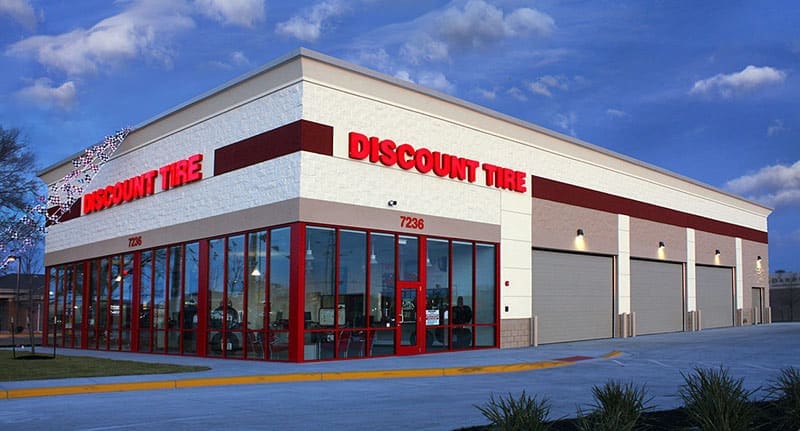 Discount Tire Clackamas
Pacific Foundation served as general contractor and installed the secant pile and tieback foundation-support system for the new store.
View projectAnchor quantities, test loads, and production requirements are reviewed for each project.
Pacific Capabilities
Pacific reviews loads, easements, utilities, drilling access, excavation timing, testing, corrosion protection, and movement criteria before estimating. That gives contractors a clearer anchor scope and sequence.
Ground Anchor FAQs
Are ground anchors and tiebacks the same thing?
In shoring work, "tiebacks" commonly refers to ground anchors used to restrain a wall. The exact system may use strand, bar, or other anchor components, but the key idea is the same: the anchor transfers load from the wall into a stable bond zone behind the excavation.
When are ground anchors preferred?
Ground anchors are considered when a shoring wall needs active restraint because of retained height, surcharge, excavation depth, wall movement limits, or adjacent structures. They are often used with soldier pile walls, secant walls, underpinning, and existing wall support.
What information does Pacific need to review ground anchor work?
Send shoring plans, anchor layout, design loads, geotechnical report, specifications, testing requirements, wall sequence, easement information, utility information, adjacent-structure constraints, and schedule requirements.
What can make ground anchor work difficult?
Anchor work becomes difficult when easements are missing, utilities conflict with anchor paths, bond conditions are uncertain, groundwater affects drilling or grout placement, access is limited, or testing and lock-off requirements are not clearly defined.
How are ground anchors different from soil nails?
Ground anchors are typically tensioned and tested to actively restrain a wall. Soil nails are usually passive reinforcement installed as excavation advances. The two methods solve different wall problems and should not be treated as interchangeable.
Can ground anchors be temporary or permanent?
Yes. Temporary and permanent anchors have different requirements for corrosion protection, detailing, testing, documentation, and long-term performance. Permanent anchors need to be reviewed carefully before pricing or construction planning.
Do anchors require permission beyond the property line?
Often, yes. If anchors extend beyond the property line or into areas controlled by another owner, agency, right-of-way, or utility corridor, anchor rights and easements need to be resolved early.
What testing is typical for ground anchors?
Testing depends on the specifications, but anchor scopes commonly include proof testing, performance testing, acceptance testing, or lock-off documentation. Pacific needs the testing requirements before pricing and scheduling the work.
Discuss Your Ground Anchor Scope
Send the shoring plans, anchor layout, geotechnical report, and design loads. Include easements, utilities, access, excavation sequence, and testing requirements so Pacific can review constructability before the approach is finalized.