
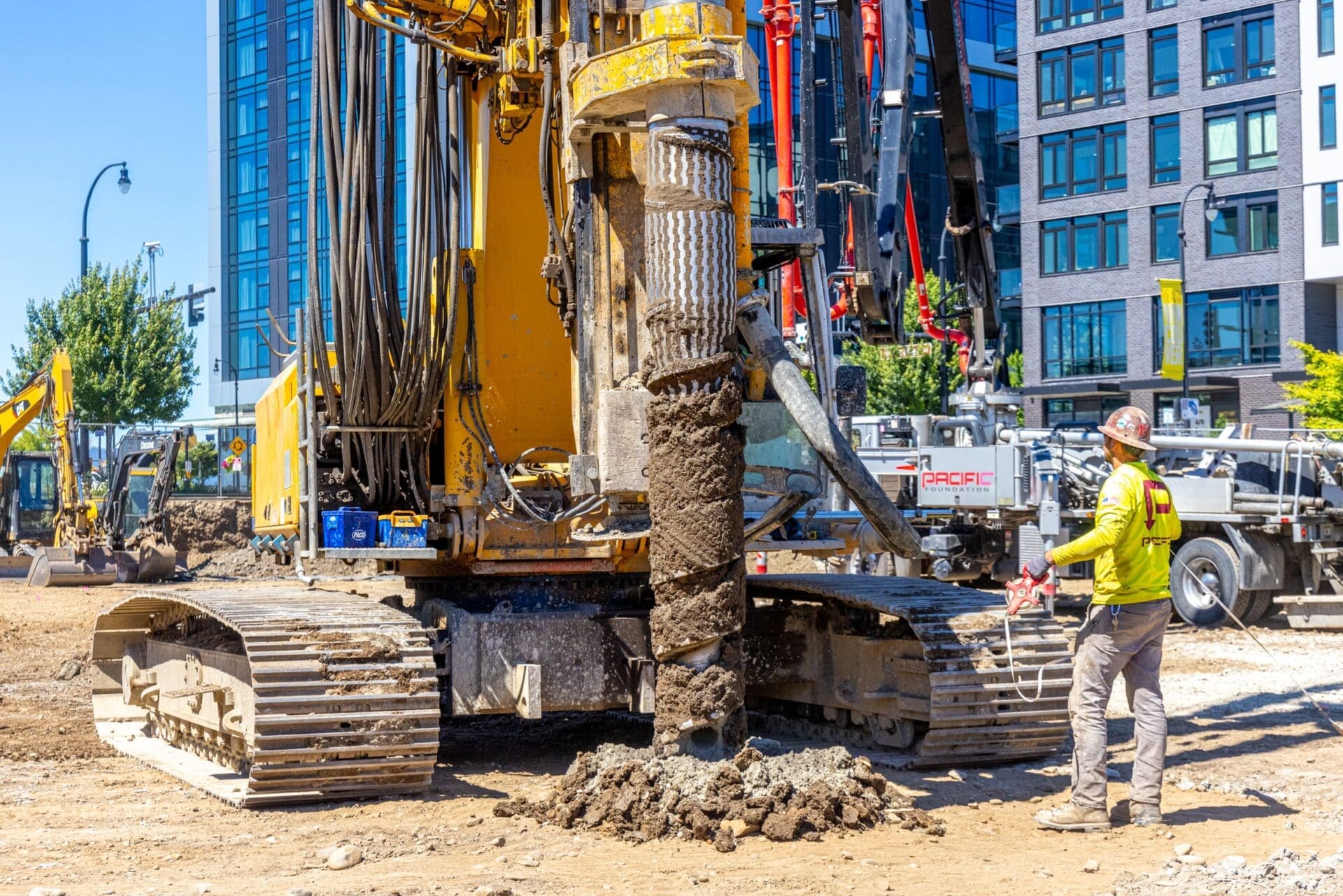
Displacement CFA Piles
Displacement CFA piles provide cast-in-place support with reduced spoils and low vibration where the soil can accept lateral displacement.
How Displacement Piles Work
Displacement CFA tooling pushes soil laterally as it advances, then places concrete or grout through the tool during withdrawal. The method can reduce spoils, but only where the soil and surrounding improvements can accept the displacement.
It is distinct from conventional CFA piles and rigid inclusions. Pacific reviews spacing, movement limits, tooling, access, material delivery, reinforcement, monitoring, and installation sequence before treating it as a production pile scope.
When to Use Displacement Piles
Displacement CFA piles fit drilled, cast-in-place foundations where the soil can accept lateral displacement and the site can support continuous installation. Conventional CFA, rigid inclusions, and other ground-improvement systems use different installation and load-transfer criteria.
Deep Foundation Support
Displacement CFA may be considered where cast-in-place foundation elements are needed and the soil profile can support displacement installation.
Rigid Inclusion Or Controlled Modulus Shaft Layouts
The method may support load-transfer or ground improvement strategies when the design intent and performance criteria call for that behavior.
Spoil-Constrained Sites
Where stockpiling, trucking, soil testing, disposal, or contaminated soil handling affects the plan, displacement tooling may reduce the material brought to the surface.
Vibration-Sensitive Work Areas
Because the method is drilled and cast in place rather than impact driven, it may be considered near structures, utilities, occupied facilities, or sensitive improvements.
Production Foundation Work
Repeating layouts can make displacement CFA practical when access, spacing, tooling, concrete or grout supply, and testing requirements support the sequence.
Early Method Comparison
The method should be compared against conventional CFA, drilled shafts, driven piles, micropiles, rigid inclusions, or other ground improvement methods while the foundation approach is developing.
Equipment and Tooling
Rig and tooling selection depends on soil profile, pile depth and geometry, access, working-platform capacity, adjacent movement limits, concrete or grout delivery, reinforcement, and installation sequence. We match the equipment setup to those requirements before production starts.
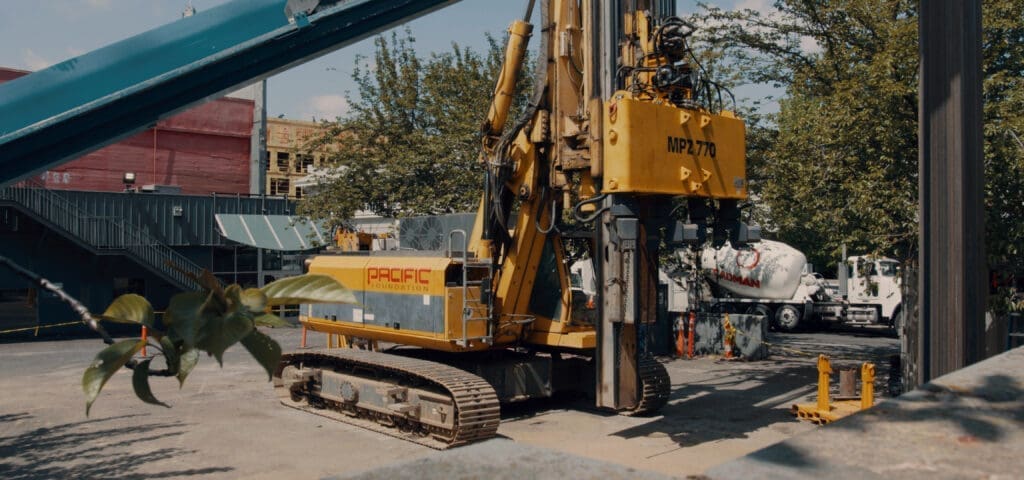 Bauer RG 21 T
The RTG RG 21 T is a telescopic leader rig for specialty drilling and ground-treatment work.
View equipment Bauer BG 33 H #5695
The Bauer BG 33 H is a large foundation drill rig built for heavy shaft drilling and mixed-method foundation work.
View equipment Bauer BG55
The Bauer BG55 is a heavy vertical drill rig used for large-diameter and deep-drilling foundation work.
View equipment Bauer BG 24 H #2026
The Bauer BG 24 H is a hydraulic foundation drill rig in the mid-size shaft-drilling class.
View equipmentFinal equipment selection depends on verified soil conditions, pile geometry, access, working-platform capacity, adjacent movement limits, material delivery, and project specifications.
Pacific Capabilities
Pacific reviews soil response, working-platform capacity, adjacent structures, utilities, access, material delivery, reinforcement, and monitoring as one installation plan. That early check helps avoid selecting the method on spoil reduction alone.
Displacement Pile FAQs
What are displacement CFA piles?
Displacement CFA piles are cast-in-place elements installed with tooling that pushes soil laterally as it advances. Concrete or grout is placed through the tool during withdrawal, and reinforcement is installed as required by the design.
How are displacement CFA piles different from conventional CFA piles?
Conventional CFA piles remove soil with continuous auger flights. Displacement CFA uses tooling designed to move soil outward instead of removing a full augered column. That changes the spoil profile, installation resistance, spacing concerns, and ground movement questions.
When should displacement CFA be considered?
It may be considered when soil displacement, spoil reduction, vibration sensitivity, production foundation work, rigid inclusion behavior, controlled modulus shafts, or ground improvement design are relevant to the project. The method still depends on soil conditions, access, layout, depth, reinforcement, and testing requirements.
Does displacement CFA always reduce spoil?
No. Displacement tooling may reduce spoil when conditions support it, but spoil generation depends on soil profile, tooling, obstructions, groundwater, predrilling, and installation behavior.
Is displacement CFA low vibration?
Displacement CFA may be considered where driven pile vibration is a concern because it is drilled and cast in place rather than impact driven. That does not eliminate heave, lateral movement, or adjacent-structure concerns.
What conditions can make displacement CFA unsuitable?
Dense layers, cobbles, uncontrolled fill, debris, obstructions, rock, tight spacing, heave-sensitive ground, utilities, nearby structures, or inadequate rig access can make displacement CFA difficult or unsuitable.
What should we send Pacific for review?
Send plans, specifications, geotechnical report, pile or inclusion layout, load or performance requirements, access constraints, working platform assumptions, adjacent structure and utility information, schedule/phasing, spoil concerns, reinforcement requirements, and testing requirements.

Discuss Your Displacement Pile Scope
Send the drawings, geotechnical report, pile layout, and performance criteria. Include the working platform, utilities, adjacent structures, schedule, and testing so Pacific can review method fit and movement risk.